
2024–2025: When Communities Started to Speak, Lead, and Transform Their Own Reality
Introduction
In one rural commune, a father once said something simple during a community dialogue:
“I used to think health decisions were only for mothers and nurses. Now I understand I am part of it.”
In another village, a group of young people organized their first environmental clean-up without being asked by anyone. They did it because they felt responsible for their own environment.
These are not isolated stories. They reflect a deeper shift taking place quietly across communities in Burundi.
At AB3D, we do not measure change only in numbers. We measure it in moments when people begin to speak, to participate, and to believe that their voice matters.
The years 2024 and 2025 were not easy. They were complex and sometimes uncertain. But they were also years in which trust grew between communities and the systems around them.
Listening Before Acting
Since 2018, AB3D has worked on civic engagement, human rights, and participatory governance.
Over time, we learned something essential.
Communities were not primarily asking for programs. They were asking to be heard.
In 2024 and 2025, we made a deliberate shift. We slowed down and listened more deeply. What we heard reshaped our work.
Health, governance, environment, and youth challenges were not separate issues in people’s lives. They were interconnected.
A child’s illness was linked to water access. A father’s absence in health decisions was linked to social norms. Environmental degradation was linked to livelihoods.
We responded by expanding into new areas such as One Health and animal welfare, not as a trend, but as a response to lived reality.
2024: The Year Trust Started to Take Shape
In 2024, AB3D reached more than 6,500 people directly and around 15,000 indirectly across 3 provinces.
But the most important story of 2024 is not reach. It is participation.
Fathers Entering the Space of Care
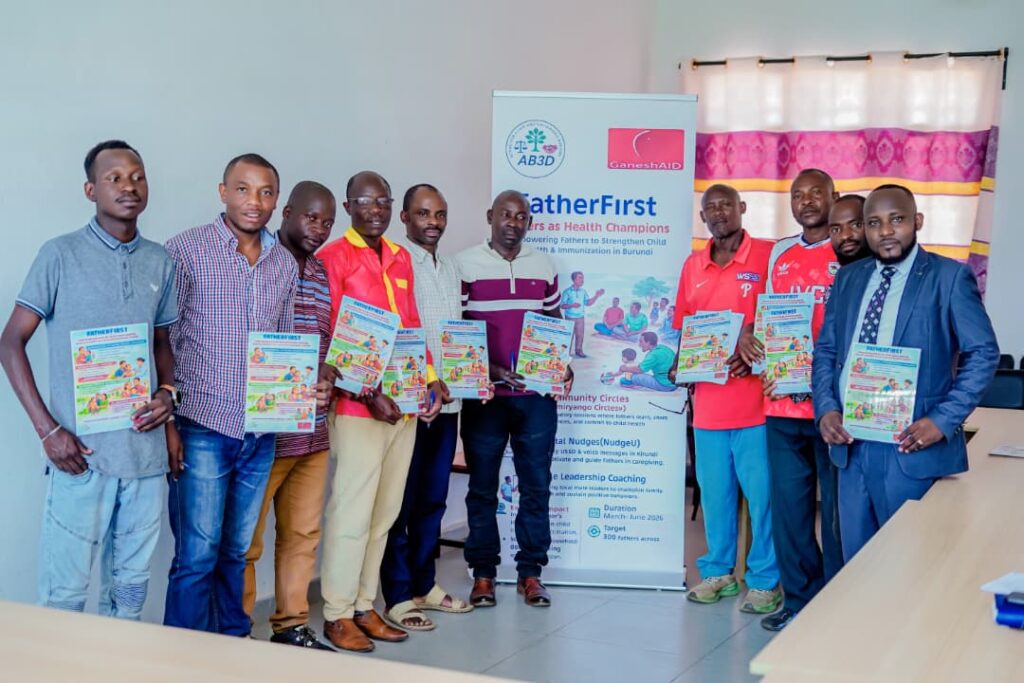
Through the Imiryango Circles, more than 150 fathers came together to discuss caregiving.
Many arrived hesitant. Some remained silent at first. But gradually, something changed.
Fathers began asking questions about vaccination, child nutrition, and family care.
One father said:
“I used to believe my role ended with providing money. Now I see my presence matters just as much.”
This shift, quiet but profound, became one of the strongest foundations of our work.
Communities Talking About Health Differently
More than 1,200 people joined health awareness sessions on maternal health, hygiene, nutrition, and vaccination.
But the real change was not attendance. It was dialogue.
Families, fathers, and community leaders began discussing health as a shared responsibility rather than external instruction.
Youth Finding Their Voice
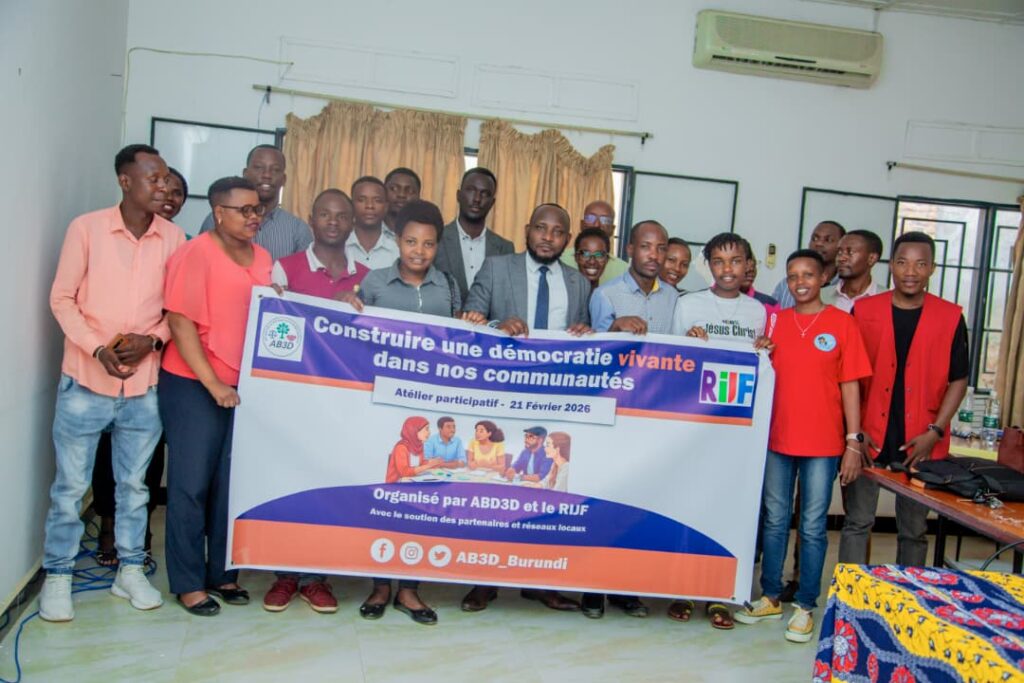
Youth forums created spaces where young people began to speak openly about leadership and governance.
For many, it was the first time they felt truly heard in such settings.
Something important began to shift. Youth were no longer only participants. They were becoming contributors.
2025: From Pilots to Real Change
If 2024 was about trust building, 2025 was about scaling that trust into visible change.
AB3D expanded to 4 provinces and more than 12 communes, reaching over 9,000 direct beneficiaries.
But again, the most important story is not scale. It is transformation.
A Visible Shift in Fatherhood
The FatherFirst initiative expanded with simple digital tools such as USSD and voice messaging.
But the most powerful change happened in everyday life.
Fathers started appearing in health centers.
By the end of 2025, the number of fathers accompanying children to primary health care visits increased from 13 percent to 42 percent.
A nurse shared a simple observation:
“Now I see fathers waiting outside with their children. This was not common before.”
This is what change looks like when it becomes visible.
Youth Moving From Participation to Action
In schools and communities, 4 health clubs brought together more than 600 students and parents.
Youth-led environmental actions also expanded. Clean-ups and awareness activities began emerging without external prompting.
Ownership was shifting inward.
Digital Tools That Reached Real Lives
We introduced USSD messages, voice calls, and radio campaigns.
The tools were simple, but their strength was consistency.
More than 80 percent of users reported satisfaction.
But more importantly, people were staying connected to health and civic information in their daily lives.
Key Initiatives That Shaped the Journey
EcoDialogue
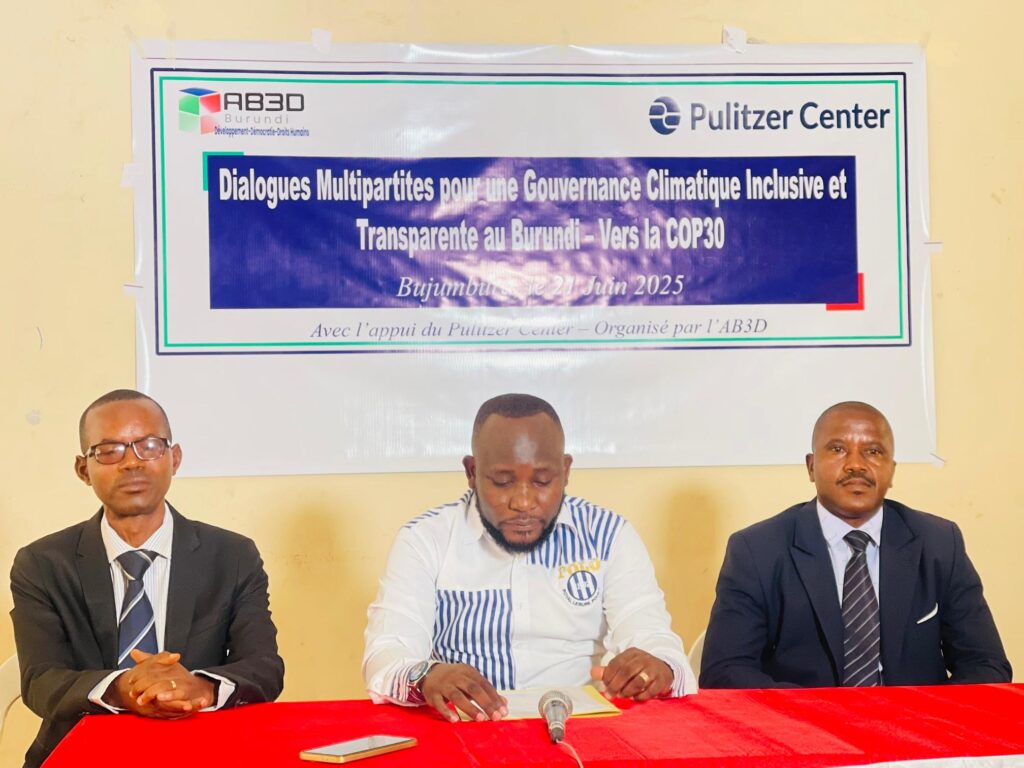
With support from the Pulitzer Center, EcoDialogue created spaces where environmental governance was discussed through real field stories.
Local voices were brought into dialogue with decision makers and experts.
Murundi Aha Ijambo, The Citizen Has the Floor
This initiative created mobile spaces for participation.
People who were usually excluded from formal meetings began speaking openly and directly.
Eco-Youth for Community Resilience
Young people led environmental actions rooted in their communities.
The result was not only awareness, but responsibility in action.
Challenges We Did Not Hide From
We faced limited funding for scaling successful pilots.
We faced logistical difficulties in rural areas and weather disruptions.
We also faced low initial awareness in some communities and structural gaps in emerging One Health work.
These challenges did not stop the work. They shaped how we adapted.
What We Learned
If there is one lesson from 2024 and 2025, it is this.
Change happens when people are involved, not only informed.
We also learned that:
Trust is built slowly, but it is the strongest foundation of impact.
Small behavior changes often signal deeper transformation.
Listening is not a step in the process, it is the process.
Communities already hold solutions when given space to act.
Looking Toward 2026
As we move into 2026, our focus is clear.
We will strengthen participatory governance and youth engagement.
We will expand climate and One Health programming.
We will deepen partnerships at local and international levels.
We will improve digital and community engagement tools.
But above all, we will remain close to communities and their realities.
Closing Reflection
Development is often described in technical language.
But in practice, it is human.
It is a father deciding to show up.
A young person deciding to speak.
A community deciding that its voice matters.
As we reflect on these two years, one truth stands out.
“The real impact is not only in what changed. It is in who started to believe they can change it.”
Nibaruta Sylvère, Founder, AB3D