
In many communities, child health is still seen as a mother’s responsibility. Fathers often remain on the sidelines. This affects key decisions such as vaccination, clinic visits, and daily care.
In Burundi, a new initiative is beginning to change that.
The FatherFirst project, implemented by AB3D in partnership with GaneshAID Consultancy Company Ltd. under the KLIC Catalyst Grant Program, aims to reposition fathers as active participants in child health and immunization. The project is currently being piloted in Kabezi and Nyabiraba communes, near Bujumbura.
After the first six weeks of implementation, initial observations already point to promising early indications of behavioral shifts among participating fathers and caregivers.
A Simple Idea: Engage Fathers Where They Are
FatherFirst is built on a simple premise. When fathers are informed and engaged, children are healthier.
The project combines three complementary approaches.
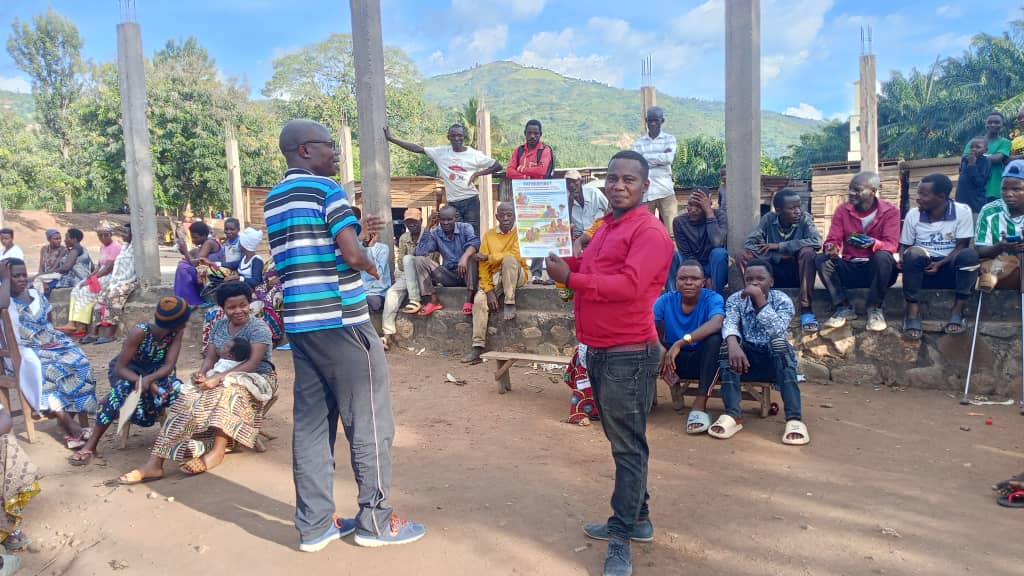
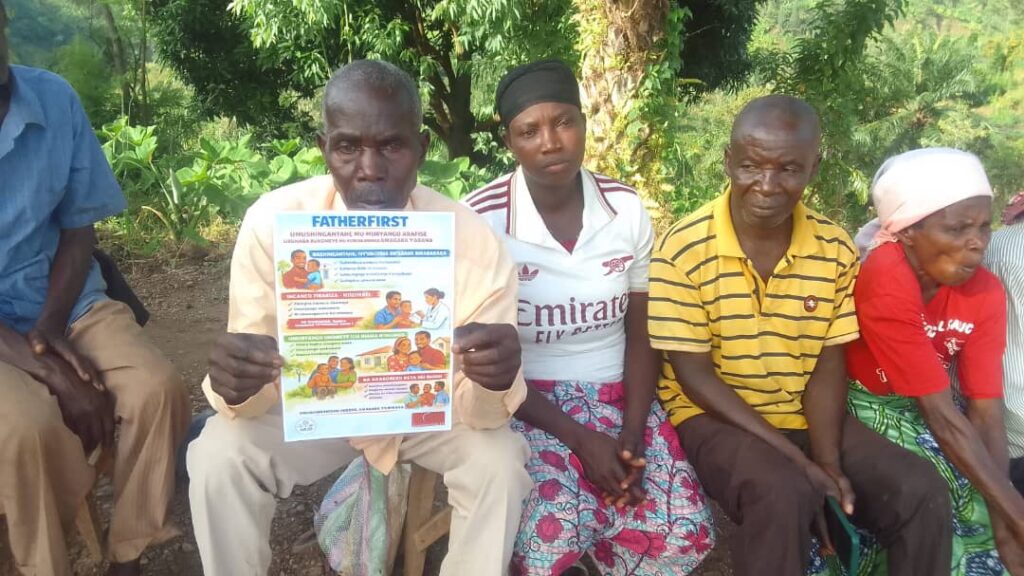
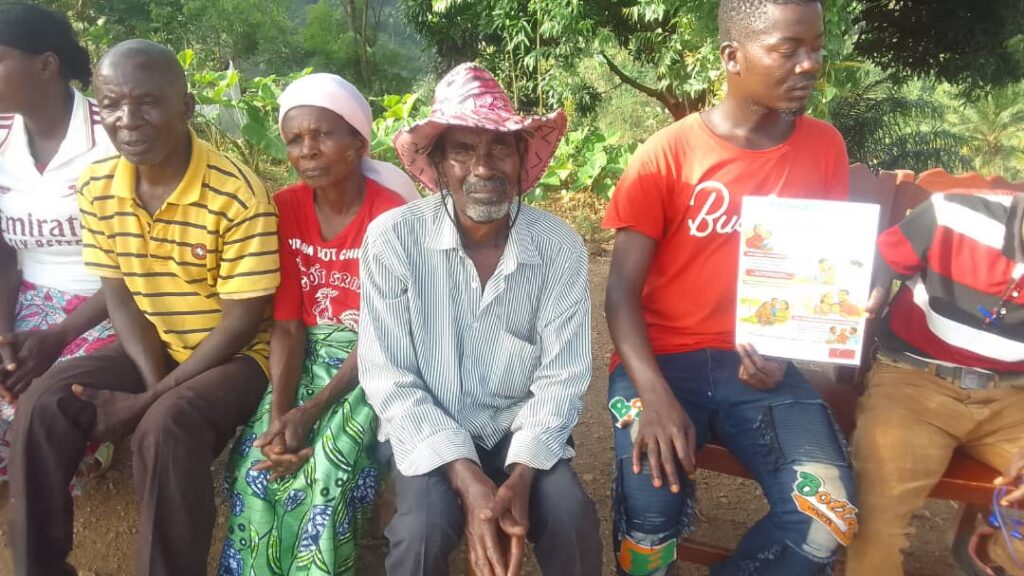
First, Imiryango Circles, which are small peer discussion groups where fathers meet regularly to exchange experiences and learn from one another in a safe environment.
Second, a digital platform called NudgeU, which delivers voice and USSD messages in Kirundi. These messages provide timely reminders on key child health actions, including vaccination and clinic visits.
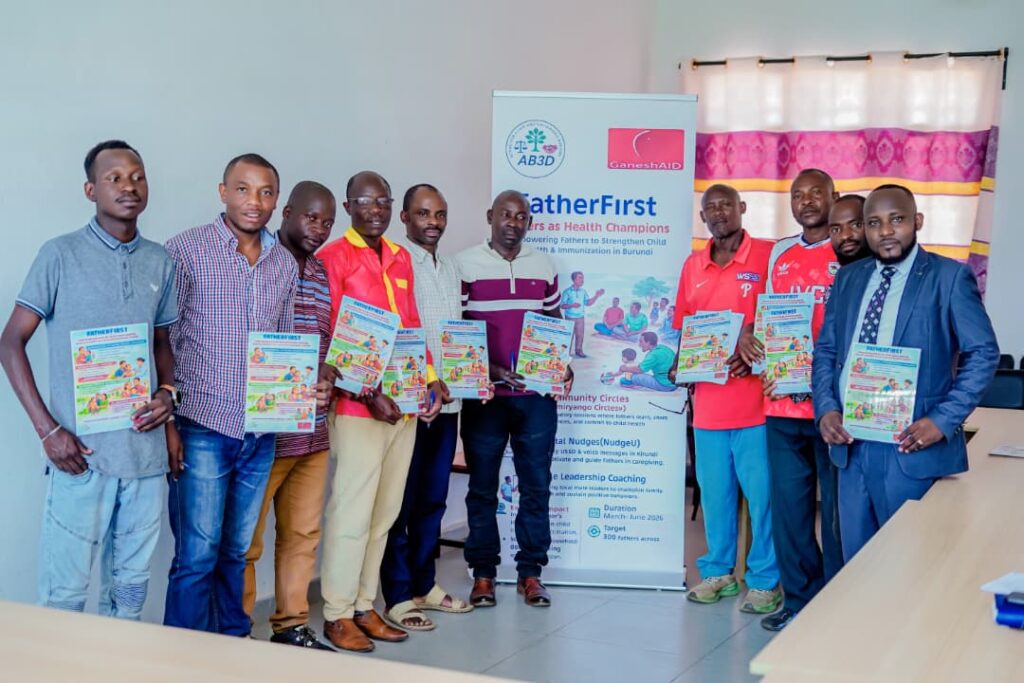
Third, trained male community leaders who act as role models. They facilitate discussions and promote positive behavioral change within their communities.
This integrated approach combines human connection and digital nudges, making the model both practical and scalable.
Strong Progress in the First Six Weeks
Implementation is progressing well across all components.
Six Imiryango Circles have been established and meet twice per month. Each session brings together 12 to 15 fathers, reaching a total of approximately 120 to 150 participants so far.
The NudgeU system is fully operational and currently reaches around 150 fathers. Between 75 and 82 percent of users actively engage with the platform, and about 80 percent report satisfaction.
Twelve male community leaders have completed their first coaching cycle. Half of them are already actively conducting sensitization activities in their communities.
These results reflect strong participation and growing local ownership.
Early Behavioral Changes
Beyond participation, early results show encouraging shifts in knowledge, attitudes, and practices.
More fathers are now accompanying their children to health centers. Attendance has increased from 13 percent at baseline to approximately 20 to 25 percent, according to early monitoring data collected during the first weeks of implementation.
Knowledge of vaccination is improving. The proportion of fathers able to name at least two vaccines has increased from 18 percent to between 35 and 40 percent.
Attitudes toward shared caregiving are also evolving. Support for joint responsibility has increased from 15 percent to around 30 to 35 percent.
“Before, I thought taking a child to the health center was the mother’s role. Now, I understand it is also my responsibility. I have already started going with my child.”
— Father, Kabezi Commune
While these are early results, they indicate a clear and positive trend.
Why the Approach Works
Several factors explain this early progress.
Peer learning plays a central role. In Imiryango Circles, fathers learn from real-life experiences shared by other men. This builds trust and reduces stigma.
“When other men speak openly, it changes how we think. You realize you are not alone.”
— Participant, Nyabiraba Commune
Digital nudges support action. Many fathers cite forgetfulness as a barrier. Voice reminders through NudgeU help translate intention into practice.
Voice messaging is particularly effective in low literacy contexts, increasing accessibility and engagement.
Finally, male community leaders influence norms. When respected men promote child health, it helps shift what is socially accepted.
“At the beginning, fathers were quiet. Now they ask questions, share experiences, and even encourage others.”
— Community Facilitator
Real Change on the Ground
Field observations confirm these changes.
Fathers are becoming more engaged and open during discussions. Participation is increasing, and conversations are more interactive.
Some fathers now accompany their partners to health facilities. Others actively remind peers about vaccination schedules.
These everyday actions signal meaningful change at the household level.
Challenges and Adaptation
As with any behavior change initiative, challenges remain.
Some fathers are still resistant to change. Access to mobile phones is uneven. Work schedules affect participation, and literacy constraints limit the effectiveness of text-based communication.
To address these challenges, the project has adapted its approach.
Voice messages are now prioritized over text. Session timing has been adjusted to better fit fathers’ availability. Facilitators increasingly use storytelling techniques, and male leaders play a stronger role in mobilization.
These adaptations are improving both reach and effectiveness.
Cost Effectiveness and Scalability Potential
Beyond early behavioral results, FatherFirst is designed as a low cost and scalable behavioral intervention that can be integrated into existing primary health care systems.
The model relies on three cost efficient components. Community based peer groups, lightweight digital nudges via USSD and voice messaging, and existing local leadership structures.
This reduces dependency on heavy infrastructure or specialized personnel.
Unlike traditional behavior change campaigns that rely on large scale media or intensive field mobilization, FatherFirst uses embedded community systems and mobile based nudges, which significantly lowers the marginal cost per beneficiary over time.
Early implementation suggests that a single community facilitator can support multiple groups of fathers, while the digital system enables continuous engagement without proportional increases in operational cost.
From a scalability perspective, the model is highly adaptable. It can be replicated across other communes in Burundi with minimal contextual adaptation. The digital component can scale nationally through existing mobile networks. The peer learning structure can be integrated into community health systems.
Importantly, the approach does not rely on high literacy levels or advanced infrastructure, making it suitable for rural and low resource settings.
As early behavioral signals continue to strengthen, FatherFirst demonstrates strong potential as a scalable and cost effective model for father inclusive primary health care in Sub Saharan Africa.
What Comes Next
The next phase will focus on deepening and sustaining behavior change.
The project will increase the use of father testimonies to strengthen peer influence. Follow up at health facilities will be reinforced to support consistent behavior. Documentation of success stories will also be expanded to inform learning and future scale up.
The objective is clear. Move from awareness to sustained behavioral change.
A Model with Strong Potential
Midterm findings show that FatherFirst is already generating meaningful results.
By combining community dialogue, digital nudges, and local leadership, the project offers a promising model for engaging fathers in child health.
This approach has strong potential for replication across Burundi and in similar contexts.
When fathers step in, families benefit. Children receive better care. Communities grow stronger.
These early insights reinforce the importance of engaging fathers as a key component in improving child health and immunization outcomes.